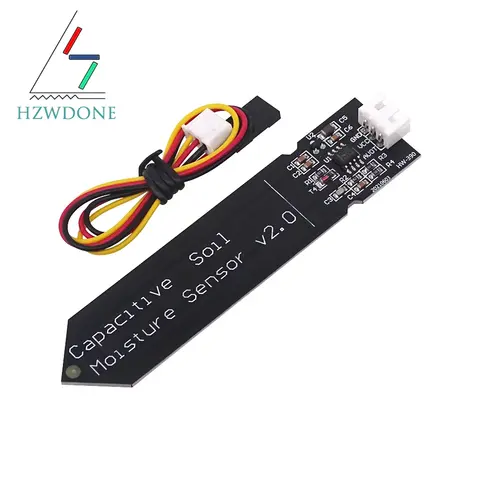
What Is a Capacitive Sensor and How Does It Work in Real-World Applications?
The capacitive sensor is a device that detects changes in capacitance to sense proximity, touch, or material levels. It is widely used in industrial automation, consumer electronics, and home appliances.
Answer: A capacitive sensor works by measuring the change in capacitance when an object comes close to or touches its surface. It is commonly used in touchscreens, level detection, and proximity sensing.
- Capacitive Sensor
- A sensor that detects changes in capacitance to sense the presence of an object or material.
- Capacitive Sensing
- The process of detecting changes in capacitance to determine proximity or touch.
- Capacitive Level Sensor
- A type of capacitive sensor used to detect the level of liquid or solid materials in a container.
In a real-world scenario, a factory worker named John needed to monitor the level of oil in a storage tank. He installed a
capacitive level sensor to detect the oil level automatically. The sensor provided accurate readings without the need for physical contact with the liquid.
- Choose a capacitive sensor suitable for the material being measured (e.g., oil, water, or powder).
- Mount the sensor at the correct height and angle to ensure accurate readings.
- Connect the sensor to a control system or display for real-time monitoring.
- Calibrate the sensor according to the manufacturer’s instructions.
How to Choose the Right Capacitive Sensor for Industrial Use?
Selecting the right capacitive sensor for industrial applications can be challenging due to the variety of types and specifications available.
Answer: To choose the right capacitive sensor, consider the material being sensed, the environment, and the required accuracy. For example, a
capacitive sensor NC (Normally Closed) is ideal for safety applications where a default signal is needed.
| Parameter | Capacitive Sensor Type A | Capacitive Sensor Type B |
| Material Compatibility | Water, oil, and non-metallic solids | Only non-conductive materials |
| Operating Range | 0–50 mm | 0–20 mm |
| Output Type | Capacitive sensor NC | Capacitive sensor NO (Normally Open) |
| Environmental Resistance | IP67 | IP65 |
In a warehouse setting, a logistics manager named Sarah needed to detect the presence of plastic boxes on a conveyor belt. She selected a capacitive sensor with a wide operating range and high environmental resistance. The sensor reliably detected the boxes without false readings.
- Identify the material and environment where the sensor will be used.
- Check the sensor’s specifications, such as operating range, output type, and environmental rating.
- Test the sensor in a controlled environment before full deployment.
- Consult with a capacitive sensor supplier if you are unsure about the best option.
What Are the Common Issues with Capacitive Sensors and How to Troubleshoot Them?
Capacitive sensors can sometimes provide inaccurate readings or fail to detect objects due to environmental or installation issues.
Answer: Common issues include false readings, signal interference, and incorrect calibration. These can be resolved by checking the installation, adjusting the sensitivity, and ensuring the sensor is compatible with the material being sensed. In a recent project, a technician named Mark encountered false readings from a
capacitive sensor circuit used in a food packaging line. The sensor was detecting dust particles instead of the actual product. He resolved the issue by recalibrating the sensor and adjusting the sensitivity settings.
- Check the sensor’s installation to ensure it is not obstructed or misaligned.
- Verify that the sensor is compatible with the material being detected.
- Adjust the sensitivity or threshold settings to reduce false readings.
- Inspect the capacitive sensor circuit for any electrical interference or grounding issues.
User Reviews and Experiences with Capacitive Sensors
User feedback is an essential part of evaluating the performance and reliability of capacitive sensors. Real-world experiences can highlight both the strengths and limitations of different models. In a recent project, a user named Lisa used a
capacitive sensor SE001 in a home automation system to detect the presence of people in a room. She found the sensor to be highly accurate and easy to install. However, she noted that it was sensitive to temperature changes, which occasionally caused false readings. Another user, David, used a
capacitive touch sensor in a custom-built control panel for a machine shop. He praised the sensor’s durability and responsiveness but mentioned that it required careful calibration to avoid false triggers. Overall, users generally report high satisfaction with capacitive sensors, especially when they are used in the correct application and properly calibrated.
Other Topics Users Are Interested In
In addition to the above topics, users often search for information on
types of capacitive sensors,
capacitive force sensor applications, and
capacitive touch sensors used in consumer electronics. These sensors are also commonly referred to as
capacitance sensors or
capacitor sensors, depending on the context. If you are interested in exploring more about capacitive sensor circuits,
capacitive sensor suppliers, or
capacitive sensing techniques, you can find detailed information from technical resources or product manufacturers.