





Results for 12800 ddr3
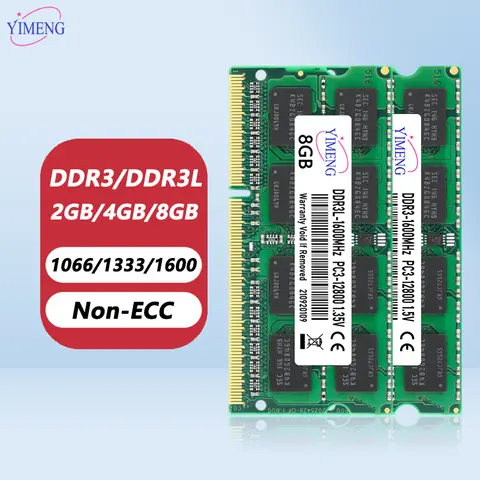
12800 DDR3 refers to a high-capacity, high-performance DDR3 SDRAM memory module commonly used in older desktop computers and servers, offering reliable data transfer speeds and stable operation under heavy workloads.
The search term 12800 ddr3 typically indicates user interest in DDR3 RAM modules with a clock speed of 12,800 MT/s (megatransfers per second), which corresponds to a 1600 MHz effective frequency—standard for DDR3-1600 memory. This specification is crucial for system performance, especially in applications requiring fast data access such as multitasking, gaming, and content creation. While DDR3 technology has been largely succeeded by DDR4 and DDR5, many legacy systems still rely on DDR3 modules, making 12800 DDR3 a relevant option for upgrades and replacements.
When selecting a 12800 DDR3 module, consider the following key factors:
Avoid common pitfalls such as mixing different speeds or timings in the same system, which can cause instability or force the RAM to run at the lowest common denominator. Always verify your system’s memory specifications before purchasing. For older systems, upgrading to 12800 DDR3 can significantly improve responsiveness, especially when running memory-intensive applications.
The search term 12800 ddr3 typically indicates user interest in DDR3 RAM modules with a clock speed of 12,800 MT/s (megatransfers per second), which corresponds to a 1600 MHz effective frequency—standard for DDR3-1600 memory. This specification is crucial for system performance, especially in applications requiring fast data access such as multitasking, gaming, and content creation. While DDR3 technology has been largely succeeded by DDR4 and DDR5, many legacy systems still rely on DDR3 modules, making 12800 DDR3 a relevant option for upgrades and replacements.
- DDR3 SDRAM
- Double Data Rate 3 Synchronous Dynamic Random-Access Memory, a type of computer memory that transfers data twice per clock cycle, offering improved bandwidth over DDR2. It operates at lower voltages (1.5V standard) and is widely used in systems from 2007 to 2015.
- MT/s (Megatransfers per second)
- A measure of data transfer rate in memory modules. For DDR3, the effective speed is calculated as twice the base clock frequency. 12800 MT/s equals 1600 MHz effective speed, which is a common standard for DDR3-1600 modules.
- Latency (CL)
- Column Latency, a timing value indicating how many clock cycles it takes for the memory to respond to a command. Lower CL values (e.g., CL10, CL11) indicate faster response times and better performance.
When selecting a 12800 DDR3 module, consider the following key factors:
- Compatibility: Ensure your motherboard supports DDR3 and the specific speed (1600 MHz). Check the maximum supported RAM type and size in your system’s manual or BIOS.
- Capacity and Configuration: 12800 DDR3 modules are typically available in 4GB, 8GB, or 16GB capacities. For optimal performance, use matched pairs (dual-channel) for balanced memory bandwidth.
- Timing and Voltage: Look for modules with low latency (e.g., CL10 or CL11) and standard voltage (1.5V). Avoid modules with non-standard voltages unless your system supports them.
- Brand and Reliability: Opt for reputable brands with proven stability. Modules from manufacturers like Crucial, Kingston, and Samsung are known for consistent performance and longevity.
Avoid common pitfalls such as mixing different speeds or timings in the same system, which can cause instability or force the RAM to run at the lowest common denominator. Always verify your system’s memory specifications before purchasing. For older systems, upgrading to 12800 DDR3 can significantly improve responsiveness, especially when running memory-intensive applications.